
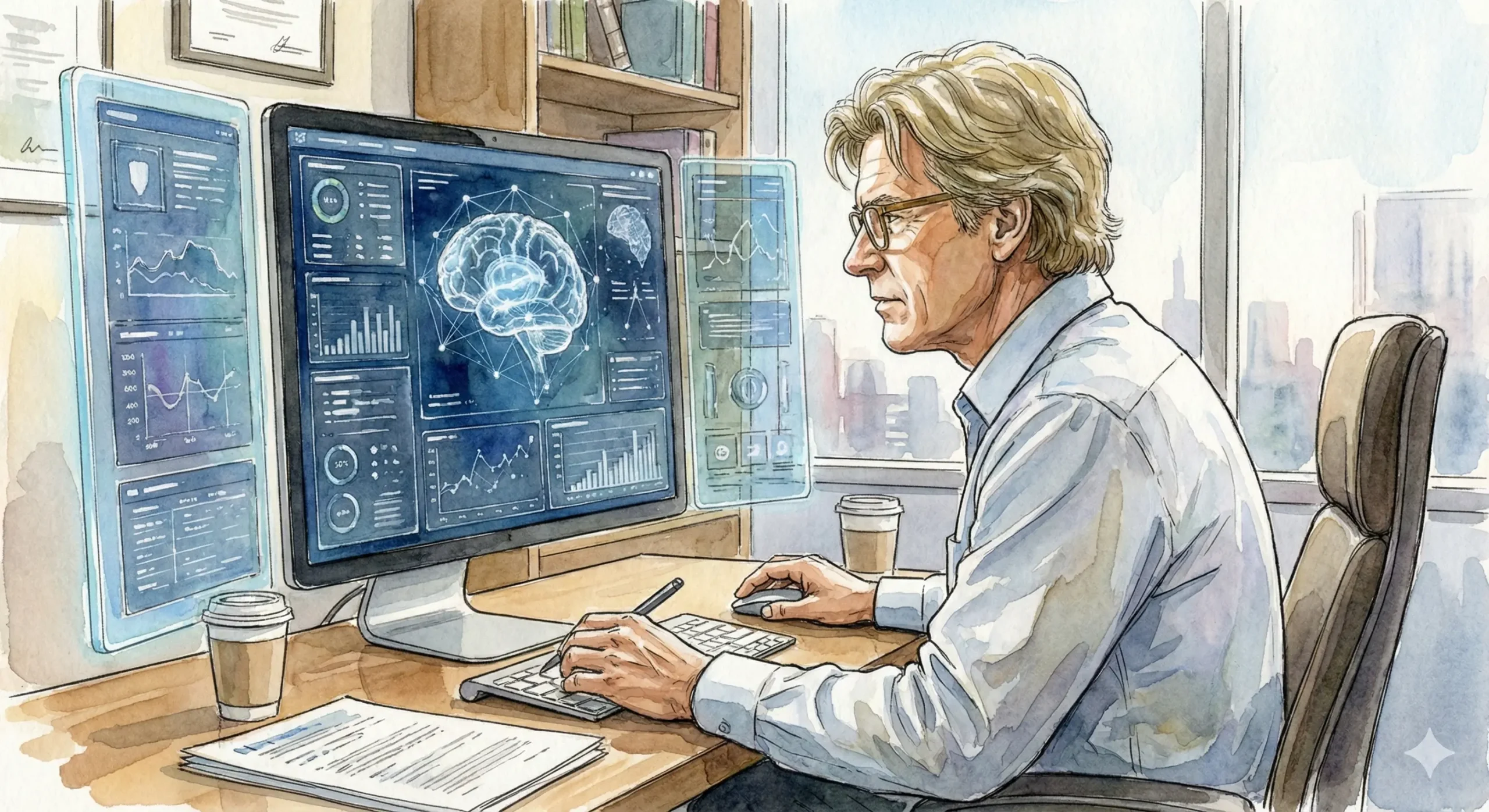
OpenAI CEO Sam Altman recently dropped a bombshell that should have every medical professional paying attention: ChatGPT, he claims, already outperforms most human doctors at diagnosis. If true, we’re witnessing a seismic shift that could fundamentally reshape how we practice medicine.
Speaking at the Capital Framework for Large Banks conference, Altman was characteristically direct: “ChatGPT today, most of the time, can give you better diagnosis than most doctors in the world.” This isn’t just Silicon Valley hyperbole—it’s a gauntlet thrown at the feet of medical education and practice as we know it.
The Human Paradox in Digital Medicine
But Altman immediately pulled back from the precipice of pure technological determinism. Even the man championing AI’s diagnostic superiority admitted he wouldn’t “entrust my medical fate to ChatGPT with no human doctor in the loop.” This contradiction reveals something profound about healthcare that Silicon Valley is just beginning to grasp: medicine isn’t just about accurate diagnosis—it’s about human connection, trust, and the irreplaceable comfort of another person who understands mortality.
This tension poses the central challenge of 21st-century medicine: Can we harness AI’s diagnostic precision while preserving the empathy, intuition, and human understanding that patients desperately need when they’re most vulnerable? The answer will determine whether AI becomes medicine’s greatest ally or its most dangerous distraction.
Beyond the Hospital: AI’s Expanding Reach and Risks
Altman’s concerns extend well beyond the exam room. He warned of AI’s darker applications: hostile nations weaponizing artificial intelligence against financial systems, and the chilling rise of voice cloning technology that can perfectly mimic anyone’s speech patterns. When some financial institutions already use voice recognition for security verification, we’re witnessing the emergence of an arms race between fraudsters and protectors—with AI powering both sides.
Perhaps most troubling for healthcare professionals: young people are increasingly treating ChatGPT as their primary confidant for medical, psychological, and legal advice. On Theo Von’s podcast, Altman revealed a disturbing reality—these intimate digital conversations enjoy none of the legal protections we’ve built around traditional doctor-patient relationships.
As Altman bluntly put it: “If you go talk to ChatGPT about your most sensitive stuff and then there’s a lawsuit or whatever, we could be required to produce that.” The implications are staggering with patients pouring their hearts out to an AI system that offers no privilege protection, no confidentiality guarantees, and no legal shield against subpoenas.
Choosing Our Future
We stand at an inflection point that will define the next generation of medical practice. AI promises diagnostic accuracy that could save countless lives, but it threatens to commoditize the most sacred aspect of healing—the human connection between doctor and patient.
The path forward requires more than technological innovation; it demands wisdom. We must develop AI systems that amplify rather than replace human judgment, create legal frameworks that protect digital patient confidentiality as fiercely as we protect traditional medical records, and resist the siren call of efficiency at the expense of empathy.
The future of medicine won’t be determined by algorithms alone, but by the choices we make today about how to integrate them. Our patients deserve both the precision of artificial intelligence and the irreplaceable comfort of human care. The question isn’t whether we can achieve both—it’s whether we’re courageous enough to demand both.