
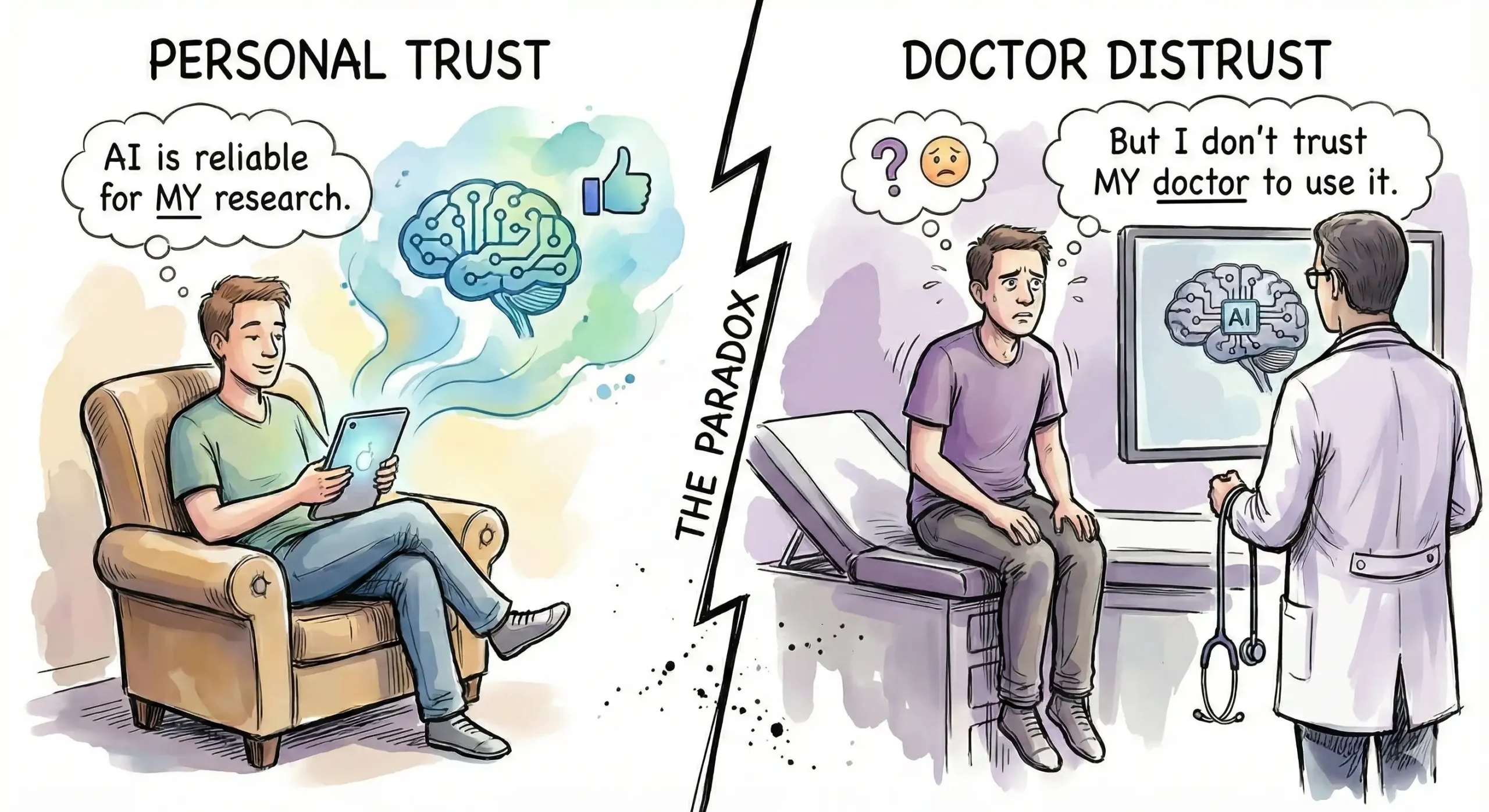
A new survey reveals a sharp contradiction in how Americans view artificial intelligence in healthcare. While a majority of the public now trusts AI for personal health research, nearly half are uncomfortable with their own doctors relying on the same technology.
According to the April 2025 poll from the Annenberg Public Policy Center (APPC) at the University of Pennsylvania, 63% of Americans consider AI-generated health information to be at least “somewhat reliable.”*Among those who have encountered AI-generated search results, 75% reported finding them useful for answering their health questions.
This personal trust, however, does not currently extend to the clinic. The APPC survey found that 49% of U.S. adults are uncomfortable with their healthcare providers using AI tools to inform patient care. These respondents stated a preference for a physician’s personal experience when making critical health decisions.
Public health experts caution that this trend is not without risk. APPC Director Kathleen Hall Jamieson warns that AI responses are no substitute for personalized medical advice and can lead to “confusion and even harm.” The information presented by these platforms may also be outdated, creating a gap between algorithmic guidance and current medical standards.