
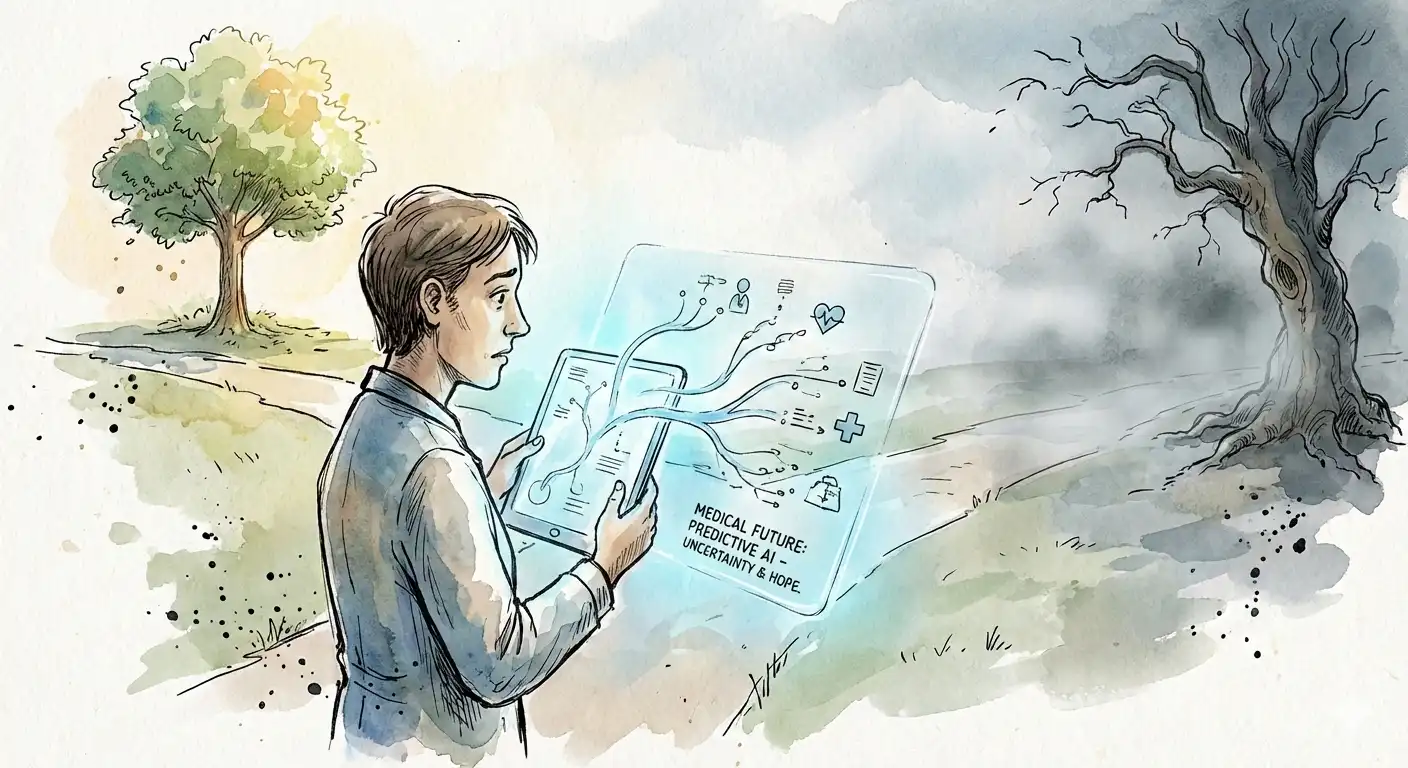
The healthcare landscape is on the cusp of a major transformation, and the driving force is a new wave of artificial intelligence. A groundbreaking study published in Nature* introduces Delphi-2M, a generative AI model that is changing the game for predictive medicine. This is not another single-purpose AI tool; it’s a sophisticated system that, much like the chatbots we’re now familiar with, uses a “generative transformer” architecture to learn the “grammar” of human health. By analyzing vast amounts of medical history, it can forecast an individual’s health trajectory years, and even decades, into the future.
What sets Delphi-2M apart is its comprehensive approach. Trained on data from hundreds of thousands of people and validated on millions more, it can predict the risk and onset of over 1,000 diseases simultaneously. This moves us beyond the traditional, reactive model of medicine—where we wait for symptoms to appear before we act—to a proactive, anticipatory one. For medical professionals, this means being able to advise patients on specific lifestyle changes or preventive treatments long before a disease takes hold, fundamentally shifting the focus of healthcare from treatment to prevention.
But with this incredible power comes a profound question: do we really want to know our medical future? The ability to predict the onset of diseases like dementia or certain cancers, for which there are currently no cures, raises significant ethical and personal dilemmas. Does having this foresight truly empower us, or does it create a new form of anxiety and despair? For some, living with the knowledge of an inevitable and incurable decline could be a heavy burden, robbing them of their present peace of mind. As a society, we must consider if the quest for perfect information might inadvertently lead to a loss of hope.
While this technology is not a crystal ball that predicts a certain future, it is a powerful forecasting tool that provides doctors and health systems with actionable, probabilistic insights. The true value of this technology may not be in revealing an inescapable fate, but rather in illuminating a path toward a healthier future. The information from models like Delphi-2M could be used to motivate positive change and reinforce the value of a wellness-focused lifestyle. This is a paradigm shift that promises to make medicine not only more effective but also more equitable, personal, and, hopefully, humane.
*Shmatko, A., Jung, A.W., Gaurav, K. et al. Learning the natural history of human disease with generative transformers. Nature (2025). https://doi.org/10.1038/s41586-025-09529-3