
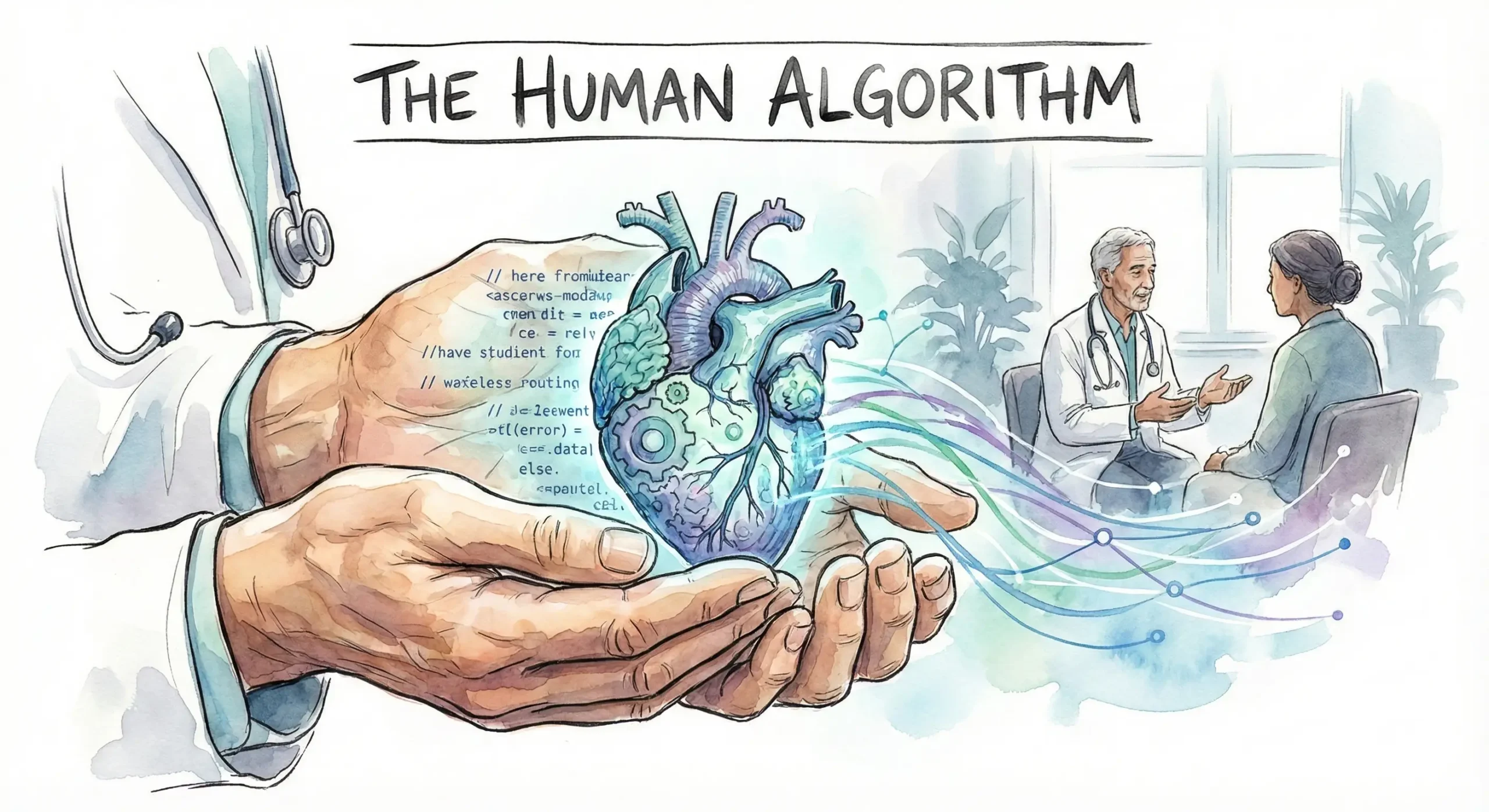
For the medical student, the first days in a primary care clinic are an exercise in dissonance. The grand, technological promise of modern medicine often shrinks to the scale of a flickering monitor in a cramped examination room, where the immediate challenge is not just to diagnose an illness but to navigate a clunky electronic health record system. The student must learn to connect with a patient while simultaneously satisfying the demands of a machine. It is in this crucible of human and digital interaction that a physician’s professional identity begins to form, and, as a new study suggests, it is the quality of the mentorship, not the sophistication of the software, that matters most.
In the European Journal of General Practice*, a study by Pfarrwaller and his colleagues offers a quiet but firm reminder of a foundational principle. They found that the choice to pursue a career in primary care is profoundly influenced by a student’s sense of belonging and their relationship with a supervising physician. A supportive team and an encouraging role model were the critical factors. While the study did not focus on technology, its implications are clear: the tools of modern medicine are only as effective as the culture in which they are used. Before a student can embrace technology as an asset, they must experience it as part of a functioning, collaborative, and humane practice.
When a supervising physician uses technology with ease—to pull up a patient’s history, to facilitate a telehealth call, to streamline a prescription—the technology ceases to be an obstacle and becomes, instead, part of the therapeutic syntax. The student observes a model not of digital proficiency, but of modern patient care. But where the tools are poorly integrated, or where the physician treats the computer as a bureaucratic adversary, the student learns a different lesson. Technology becomes a source of friction, a tiresome appendage to the authentic work of medicine, potentially steering promising students away from a field they perceive as beleaguered by its own systems.
Ultimately, the study suggests that showing a student how to use technology is really about showing them how to be a physician in the twenty-first century. The challenge for medical educators is not merely to install the latest software, but to cultivate the human relationships through which its true value is revealed. In an age leaning ever more on artificial intelligence, the most crucial lessons are still taught by example, one patient and one student at a time.
*’I felt I belonged’: A qualitative study of role modeling and team integration as key drivers of primary care career choice.
Eva Pfarrwaller, Camille Laurent, Johanna Sommer, Anne Baroffio, Dagmar M Haller, Hubert Maisonneuve
European Journal of General Practice 2025 December